Wednesday, 26 March 2014

UNIT 57: Image inspired


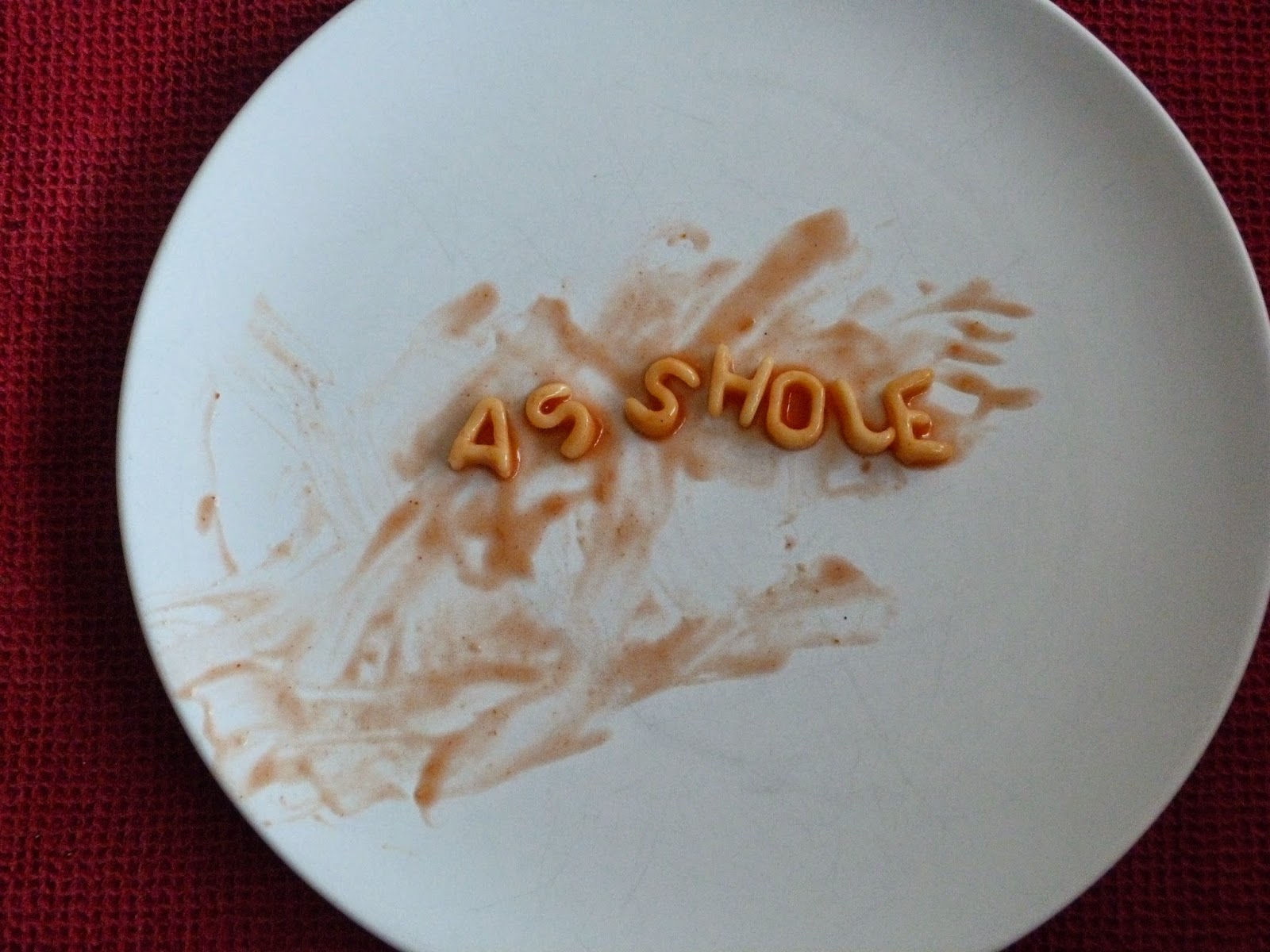
Alpha bits by Tibi Tibi Neiuspiel


I enjoyed the idea of turning something that isn't made to last longer than a few days into something more permeant and lasting. Using basic lighting and muted colours give a serene feeling upon looking at it.

I also enjoyed using the alpha bits to spell out words and phrases that could give the meaning of 'eat your words'.


Eat your words, shit head by Hannah Gowdy


Monday, 10 February 2014

UNIT 57: Light Graffiti

Light Graffiti


Light graffiti or 'Light Painting' Or 'Light Writing' is a long exposure photography project that uses lights and bright objects to create an affect of the lights staying in one place.

While the lights and objects don't stay in the same place for long the light trails left are caught on camera and leave an interesting image. 


Friday, 7 February 2014

Evaluation of Student awards

A leader is best when people barely know he exists, when his work is done, his aim fulfilled, they will say: we did it ourselves. - Lao Tzu.

Respectfully to Lao Tzu I disagree; leadership is defined as 'the action of leading a group of people or an organisation, or the ability to do this' a leader would be something of a fixed point of control in times of crisis and panic someone that people can rely on to have a plan.

While I was not the leader I was one of four that worked together closely to ensure that everything went smoothly during production and the live event.

Being one of the producers in the prerecorded student awards and the gallery director in the live was a challenge for me as I had never done any sort of role as a director or producer in other works before and thus was unsure of whether I was doing the role correctly.

Comparing my role in this project to a role in the industry I had to act in a similar way to how a professional and experienced director and producer which meant that I had to use the same language and terms and I also had to be aware of everything going around me while focusing on the screens.

As gallery director I had to do a number of important jobs with the rest of the crew that would ensure that filming went as smoothly as possible. I had to manage what was going to be shown on the screen following the running order given to me, which meant I had to work closely with the vision mixer, four camera operators and the floor manager.

Talking into the microphones to address the camera operators , the vision mixer and the floor manager on the set was part of being a director and it was an important part of it as this was the only means of communication between the floor and me, additionally I had to use the correct language while counting down to the inserts that would be played to the audience and would be part of the recording and keep calm under pressure.

An example of this is when during the live filming one of my camera operators camera went completely black and then was told on inquiry that it was because of a low battery and the vision mixer and I had to use the two remaining cameras that were working until the runner I sent with the battery had gotten to the camera.

In this situation me and the vision mixer had to remain calm and carry on with filming despite our lack of variation in camera shots.

Unfortunately I did lose my temper at one point before the live filming because two of my camera operators were having the starting of an argument and would most definitely not listen to me if I had not raised my voice to silence them but I quickly realised that although yelling was essentially effective it was not professional and I became determined to not do it again which I did not.

I was also one of four producers in the preproduction of the openings and inserts however I did often have problems from the start as I was absent for two weeks consecutively at the beginning which definitely caused problems with a majority of the work and in result my crew often did not report back to me with details of work making it difficult to make plans with teachers and students for filming.

I also had to compare drafts and information with our client and use their feedback to improve our inserts and that is something a professional producer would've done.


Monday, 3 February 2014

UNIT 27: Factual Programme Production Techniques for TV

 BBC Editorial guidelines.

Accuracy

Accuracy in the BBC is not directly the truthfulness of the information being produced, although it is a major part of it, it is also when, perhaps, an issue presented is controversial to approach and announce to the general public so therefore the BBC needs relevant opinions to discuss the topic along with facts that need to be carefully considered and compared to understand the truth.


  • Finding correct material and information via primary sources 
  • Confirm and correct facts and data
  • Check the factualness of documents and digital material and evidence
  • Accuracy > Speed
Example:

http://news.bbc.co.uk/1/hi/health/2284783.stm

'Blondes to die out in 200 years'

In 2002 BBC news online published an article claiming that in the next 200 years natural blondes will die out. The article speaks of this information coming from a study in Germany that, on research, does not actually exist. It goes on to say that dyed blondes are more attractive to men which has no supporting information.  


Section 5: Harm and Offence - Violence 

Section 5: harm and offence - violence is used to warn and protect audience members, especially young children, who are particularly frightened and distressed at real life violence being shown in the media.

Example:

http://www.youtube.com/watch?v=OFs0b97sqg4

In 2011 the London Riots broke out across several London Boroughs it included; looting, arson, mass deployment of police and general chaos. This news report shows several long clips of arson and violence in the streets but it is forewarned.

Ofcom codes


Section 3: Crime

Section 3: crime is to ensure that material and information that was involved in the creation of a crime will not be included in radio and news reports.


Example:

http://www.broadcastnow.co.uk/news/broadcasters/broadcasters-cleared-over-coverage-of-woolwich-killing/5065050.article

In a radio report that covered the Woolwich killing of Fusilier Lee Rigby many audience members claimed that the descriptions were too graphic in detail and caused distress among viewers. 

Privacy


Example:

http://www.independent.co.uk/news/media/press/kate-mccann-felt-violated-by-newspaper-6266466.html

In 2008 Kate Mccann's phone was hacked and then used in an article against her knowledge. This went against ofcoms codes.   


Tuesday, 17 December 2013

Production diary 1


Production diary


Crew A includes the students Tomas, Allisson, Alex and their producer Hannah. Crew A are in charge of the title opening.

The theme is ‘Students’ and thus they’re filming will focus around the students of the college.

Wednesday 6th

A member of Crew A, The student Tomas, took advantage of the City of Westminster college open day and using a college Canon HD camera filmed a significant amount for the opening. The crew member Tomas asked a member of staff Charlie Penrose for a selection of photographs that have students around the college as the main subjects which Charlie Penrose himself took.

The filmed the following footage:

·       Students talking at the stalls
·       Students walking around
·       Students and career guides talking about potential opportunities

Thursday 7th+Friday 8th

Two members of Crew A, The students Tomas and Allisson, went out during class to film with an average Canon HD camera and a tripod. They filmed for the majority of the day.

They planned to film the students in average college situations such as class or hanging around different casual environments such as the canteen.

On Friday Crew member Tomas received the student photos from staff member Charlie Penrose.

They filmed the following subjects:

·       Students playing basketball
·       Students dancing in class
·       Students in business class
·       Students playing table tennis
·       Students playing football during a physical education

This footage was recorded for the purpose of being part of the opening sequence that will open the recorded Student awards

Monday 11th

Members of Crew A, The students Tomas and Allisson plan to use their class time to go out and film students in the gym and then speak to the head of facility of engineering to allow them to film while the class is being taught. Crew A will be filming practical work during a lesson. Canon HD college cameras will be used. Plans to film in a science class where also made for Tuesday.

They filmed the following footage:

·       Students preparing the equipment
·       Students using the equipment in the gym
·       Students exercising
·       Human physiology theory

Tuesday 12th

Members of Crew A Alex, Allisson and Tomas filmed the science department during lessons taking place, Members of crew A Allison and Tomas filmed the close protection course during activities. They filmed for a majority  of the day with a canon HD. They planned to film students using the science equipment and the close protection course  a practical demonstration of what they learn during the class

They filmed the following footage:

Science department students using the equipment
theory science lesson
Close protection course practical demonstration


Wednesday 13th 

Crew members Alex, Thomas and Allison filmed outside in front of the college for the opening sequence. Crew member Allison also filmed the sports department.

They filmed the following footage:

Students interacting during college
Students in class
Students in the sports department ( Using the sports equipment, Playing basketball, playing football, talking to the sports teachers)
Students outside the college

Thursday 14th

Crew member Tomas came into college to sort a majority of the footage out and asked member of staff Charlie for some photos he has taken and then began started editing.

Friday 15th

Crew Member Tomas came into the college again to continue editing

Monday 18th

Crew member Tomas completed the first draft of the opening sequence and showed it to the rest of the crew members and removed the filming from close protection.

Monday 2nd December

The client reviewed all the inserts and made suggestions on what they want redone. Crew members Thomas, Allison and Alex went out that afternoon to re film several parts.

Tuesday 3rd

Crew member Thomas re edited with new footage and music and completed the second draft.

Wednesday 4th

Opening sequences was viewed by other crew members and re evaluated. Crew member Thomas reedited.


Monday, 11 November 2013

UNIT 23: Multi Camera techniques

UNIT 23: Multi camera techniques


TV Soap:  Doctors


Broadcasted at 1:45pm, BBC One Doctors is a British TV soap set in a fictional Midlands town of Letherbridge, it follows the stories of the staff, and their families, of a doctors surgery. It was created by Chris Murray in 2000 and has over 2500 episodes since.

Doctors seems to have viewers from “all walks of life” because of the diversity and differences in the characters where the characters go through many challenges of life that often can be related to it is common for the viewers to associate their problems with the characters and thus creating a relatable show.

However TV soaps are more commonly watched by the female gender aged 35-54 due to the heavy romance in the plots. Compared to the shows Lost or 24, Doctors has a larger demographic in women.

Doctors has a very realistic feel to it as it is mostly filmed without any editing or effects added. It is often set inside using artificial lighting and focuses on the characters on the screen and the development of the relationships between the characters instead of the scenery and location.  Despite the themes and problems that the characters have to deal with it Doctors is rather light in terms of stressfulness and is probably watched by families together.

Doctors is shown on a main channel on British Television which means it draws in a large crowd of viewers as the BBC is one of most popular and widely recognised channels in the UK in which people watch daily.  Doctors is played right after BBC London News at 1:30pm in the afternoon. 
Doctors, as shown, is always on everyday at 1:45 in the afternoon after BBC London News. This schedule rarely changes.

Doctors scene, Episode 96 ‘Collateral Damage’


12:42- 14:50


Like a majority of TV Soap operas and dramas Doctors uses very simple and low profile shots, rarely using anything but Mid shots, Mediums and close ups. Often on eye level with the characters themselves. It is often to bring attention to the characters reactions and bring the audience into the scene and therefore there is not a lot of variety in these shots, If theses shots and camera views drastically changed and became something we could not see ourselves (For instants: a birds eye view from above) the audience would become disconnected from the story as it would not be ‘realistic’ to the audiences as they would not be able to become part of the show.

The low profile and eye level shots are often to keep the viewers attention on the characters themselves, as they are the main subjects in the shot and should not have anything distracting the viewer from them.

TV soaps such as Doctors are as a majority filmed multi camera as the demand for new episodes almost daily requires more footage with less need to edit and therefore it becomes an almost assembly line for making new shows; scripts written, filming commences, editing takes place, show is aired.


Quiz/Game  show: Never Mind the Buzzcocks   

Broadcasted at 10:00pm on Mondays on BBC Two Never Mind the Buzzcocks is a British comedy panel game show that asks questions with a music theme. The show has a celebrity guest presenter every episode with two guest team members for each side every week. The only recurring players on Buzzcocks are Noel Fielding and Phill Jupitus as team captains.  Often the team members are musicians themselves while the guest presenter is a comedian or actor.

Buzzcocks has been running since 1996 but has only become better known since 2005. It has over 250 episodes.

The show is well known for its dry and sarcastic humour and provocative and controversial themes and questions. Celebrities that have appeared on Buzzcocks include Martin Freeman, Jonathon Ross, Catherine Tate, Jack Whitehall, Paloma Faith, Rizzle Kicks, Eliza Doolittle, Kathy Burk, ect.

Buzzcocks is a prime time hit on BBC 2 and often has a large amount of viewers. The main audience of Buzzcocks is young adults aged 16-34 as the show is aired late and is appealing towards said demographic.  Although the demographics for females and males are close, more females watch Buzzcocks than males.

Originally when the show first aired the majority group of the demographics was older but because of the change in theme of the show becoming more modern and trendy the majority audience have become younger who have an interest in music.

The dry wit of the show is often is selling point as many young adults that watch the show have the same humour type and sarcastic tendencies.
 
  
Never Mind the Buzzcocks, Season 25 episode 3

17:26 – 17:56

Buzzcocks shots are normally to focus on the participants and the presenter (And occasionally a shot of the audience) so they focus on mid shots, wide shots, medium close ups and close ups considering the show has a comedy genre it often uses mid shots and close ups on the presenter and participants faces as they speak to properly illustrate the joke to the audience.

Buzzcocks also often keeps the camera to eye level on using jib shots and over the head for shots of the audience. Using eye level also means that presenters can talk directly into the camera occasionally addressing the viewers directly- thus ‘breaking the fourth wall’ and bring the viewers into the show on another level. Buzzcocks will rarely have camera movement and keep the shots on the subjects instead of the scenery as it essential that the viewers can see the subjects when they speak but Buzzcocks will have sweeps of the setting to show where they are to the viewer.


TV Sitcom: Black Books 

Black Books is a British sitcom that was created in 2000 by Dylan Moran, Who also stared, and Grahan Linehan. It was shown on Chanel 4 at 10:00pm in the evening and ran until 2004.

Black Books is about the life of surly and hostile bookshop owner Bernard Black who hates everything but smoking, drinking and reading. The show revolves around him, his oldest friend Fran, and Manny and their attempts to bring Bernard into a more socially accepting lifestyle with chaotic and miserable results. Black Books is known for having a dry and sarcastic sense of humour and, ironically, being a ‘black’ comedy.

Since sitcoms are often loosely inspired by real life situation a majority of the audience can relate to on some level (In comparison the sitcom ‘Friends’ depicts the lives of 6 young adults and their failures in their jobs/love life/family life and other parts that the audience could relate to on a personal level) Black Books often has storylines or plots that can borderline unbelievable but the characters are what the audience can relate to: Bernard and his complete disdain for life around him and his failures trying to “fit in”,  Mannys hatred of his previous stressed filled job and failure after trying hard, and Frans complete disaster of a love life.

Young adults aged around 18-35 have been shown to be the major percentage demographic of people watching Black Books